
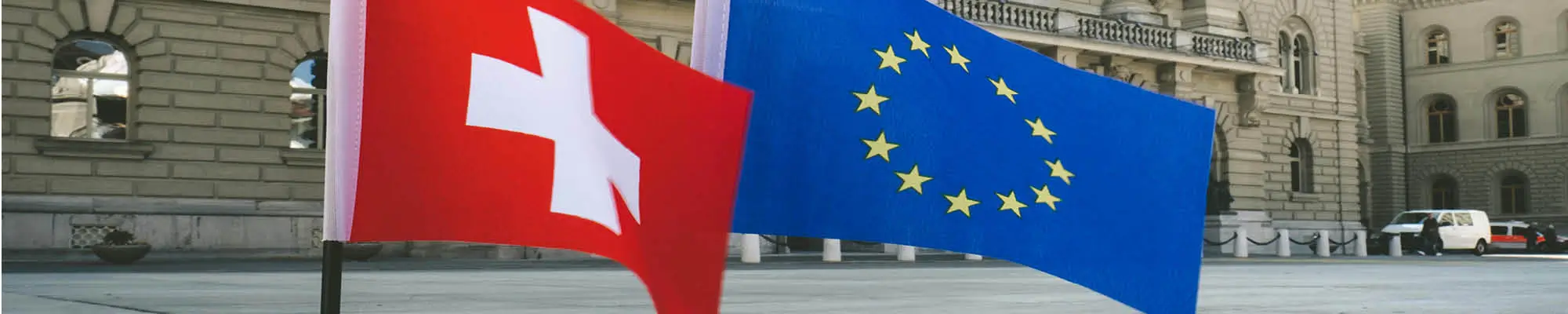
How companies benefit from Bilateral Agreements III
Interview with Dr Michael Beer on Bilateral Agreements III
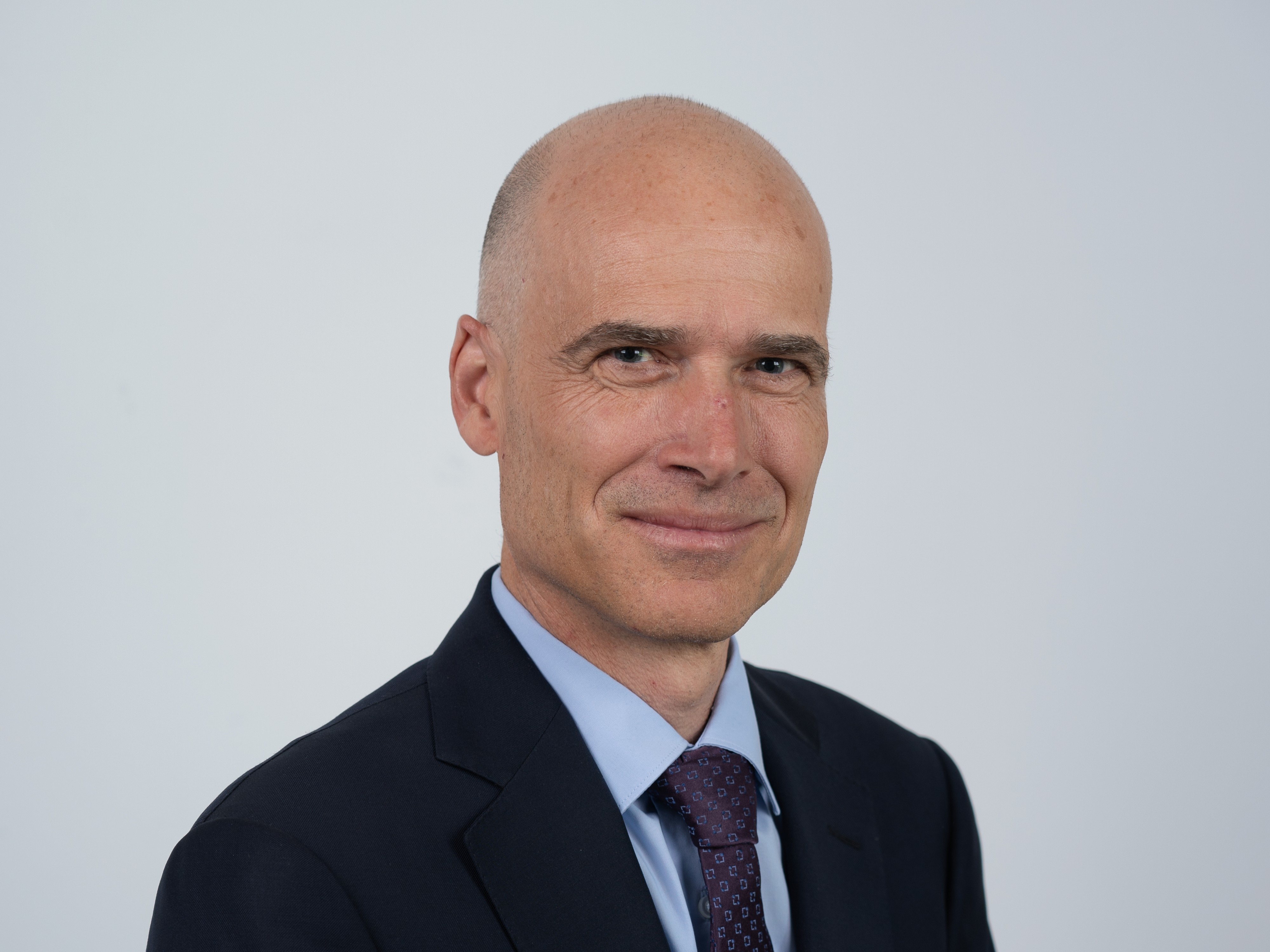
Dr. Michael Beer,
Deputy Director of the Federal Food Safety and Veterinary Office (FSVO)
Food safety has long been a cross-border issue. With Bilateral Agreements III, Switzerland aims to deepen its cooperation with the EU in this area. What does that mean in concrete terms for companies? Will anything change in inspections, in cooperation with the authorities, or in dealing with standards and norms such as HACCP and ISO 22000? SQS discusses this with Michael Beer, Deputy Director of the Federal Food Safety and Veterinary Office (FSVO) and speaker at Swiss Food Day 2026. Claudia Furger, SQS
Mr Beer, you deal with food safety on a daily basis in your professional life. When you go grocery shopping in your private life, are you able to simply be a consumer? Or is the expert always watching too?
In my private life, I am first and foremost an interested consumer for whom it is important to know where food comes from and under what conditions it was produced. Shopping, cooking and eating are above all things that I enjoy.
So, no permanent scientific risk check in the supermarket?
No, absolutely not. I trust both the Swiss and the EU food safety system. I know the experts behind them and I know how seriously they take their work. That trust naturally also helps me stay relaxed in my private life.
You mentioned it. The system works and has long been internationally interconnected. Which brings us to Bilateral Agreements III. Switzerland wants to deepen cooperation with the EU. If you had to sum it up for a food company, what is the core issue? Perhaps first the reassuring news: in practice, there will be no noticeable changes for Swiss food companies.
Why not? Because Swiss food law already corresponds to EU law by more than 90 per cent and is therefore already largely harmonised. But back to your question: at its core, Bilateral Agreements III are about creating a common food safety area.
How do companies benefit from that? For example, through easier access to the EU Single market by reducing non-tariff trade barriers. At the same time, uniform rules for both parties create greater legal certainty and planning security. This strengthens competitiveness and ultimately also consumer protection.
If much is already harmonised today, why is there still a need for a new protocol on food safety? The existing agriculture agreement governs trade in live animals, animal products and foodstuffs of animal origin. In future, the new protocol will also cover non-animal foodstuffs as well as the authorisation of plant protection products.
So, an expansion of the existing framework?Exactly. At the same time, the protocol sets out key exceptions in favour of Switzerland. For example, Switzerland will retain its high standards regarding genetically modified organisms and animal welfare.
And beyond that? What is particularly significant is that Switzerland will in future gain access to and representation in relevant EU bodies, for example at EFSA or within the EU rapid alert systems. This means Switzerland will learn about possible health risks along the entire food chain at the same time as the EU and will be able to respond more quickly. At the same time, Switzerland will newly gain a say and be able to contribute its interests and concerns, for example in authorisation procedures for plant protection products.
You mention the rapid alert systems. Recently, there was a Europe-wide recall of contaminated baby food. What does such a case show about cooperation between Switzerland and the EU?
This case shows in exemplary fashion how valuable and important even closer cooperation with the EU is. Direct access to the EU rapid alert system for food and feed, the so-called RASFF, will in future enable Switzerland to receive real-time information on health risks in products. That way, we can act more quickly instead of merely reacting.
Let us come to the day-to-day reality of businesses. If the agreement enters into force, should companies expect changes in inspections or in their dealings with the authorities?
No. Nothing will change in day-to-day practice. That applies to food companies just as much as to very small providers, market stalls, association events or farm shops. As I said, Swiss food law is already practically identical to that of the EU. The same hygiene regulations and quality requirements will continue to apply.
So no new inspection authorities from Brussels?
I can reassure you on that point. Official inspections of food businesses are carried out today and will continue in future to be carried out by our cantonal enforcement authorities, not by the EU. The European Commission will continue to conduct audits of national control systems. That applies to EU member states, to Switzerland and to other third countries. That is already standard practice today.
Are there areas in which things will become easier for companies? Yes. Swiss companies benefit from simplified reciprocal market access, from fewer administrative hurdles and duplications, as well as from stronger legal certainty and planning security through uniform rules.
Can you give an example?
Product launches in both markets, that is, in Switzerland and in the EU, will become easier and faster. Because the same regulations apply, a single dossier will be sufficient in future. At the same time, harmonised control and documentation obligations will also apply to companies in keeping with the same rules.
Many food businesses today work with standards such as HACCP, ISO 22000 or FSSC 22000. Will anything change for these businesses in their operational day-to-day work?
For businesses that already work with such standards, there will be no noticeable operational changes. HACCP is a legal requirement in both the EU and Switzerland. ISO and FSSC are voluntary, but certification improves market access and the credibility of products.
SMEs feel the administrative burden particularly strongly. Can they cope with this development in the long term?Today and in future, regular reviews are needed to determine where legal regulations are truly necessary and where they can be removed or simplified.
Is that happening at present?
The EU is currently working on the so-called Omnibus package. The aim is to reduce the administrative burden for companies, simplify reporting obligations and strengthen competitiveness. At the same time, it must be noted that the Swiss Parliament has also passed quite a few new regulations in food law in recent years that mean additional work for companies.
Where do you specifically see potential for simplification?
Above all in digitalisation. Documentation obligations could thereby become significantly easier
Do you have an example?
The documentation of product traceability is crucial, but today it is in some cases complex. If in future all information moves along with the raw materials in a common data system, the effort involved will be reduced and the system will at the same time become more efficient.
The EU is often described as a “Brussels bureaucratic monster”. Hand on heart: how much more pragmatic and practice-oriented is federal Bern?
I cannot speak on behalf of companies, but I would also very much like to know that myself (smiles). What matters above all is direct exchange between the authorities and companies. In Switzerland, in my view, we are somewhat ahead of some neighbouring countries in that respect. We want to maintain that way of working.
Let us look into the future. What risk do businesses take if Switzerland rejects Bilateral Agreements III?
Honestly speaking, that is not an option. It is often underestimated how much goodwill the EU has shown Switzerland in the past. For example, the EU currently ensures border controls for Swiss imports of food products of animal origin. As a small country, we simply do not have the personnel resources for such tasks.
What would happen in concrete terms if it were rejected?There would be no immediate system breakdown. But a creeping risk would arise. That includes restricted access to safety-relevant information, more regulatory hurdles for exports to the EU, less legal certainty and long-term competitive disadvantages. The risk would be especially relevant for strongly export-oriented companies in the Swiss food industry.
Finally, what do you advise food businesses that are following the discussion around Bilateral Agreements III with a certain degree of uncertainty?
To inform themselves based on facts, ask critical questions and obtain transparent answers from the experts who were involved in the EU negotiations. At the FSVO, our doors are always open for that.
The interview originally appeared on the blog portal of the Swiss Association for Quality and Management Systems (SQS).
INFOBOX
****************************************************************************************************************Bilateral Agreements III and food safety briefly
With Bilateral Agreements III, Switzerland and the EU aim to deepen their close economic cooperation. A central component is food safety. Bilateral trade between Switzerland and the EU amounts to more than CHF 16 billion annually, with the EU by far Switzerland’s most important trading partner. To detect risks such as contamination, food fraud or products harmful to health more quickly, a common food safety area is to be created.
Specifically, the existing agriculture agreement of 1999 is being restructured. The agricultural policy part remains excluded from a dynamic adoption of legislation. The food safety rules, on the other hand, are brought together in a new protocol that provides for the dynamic adoption of EU law. In return, Switzerland will gain access to the European warning and control systems as well as to the European Food Safety Authority (EFSA). This will allow it to respond to health risks at the same time as the EU and will no longer have to wait for information after the fact. The protocol does not change Swiss standards in animal welfare, genetically modified organisms or the obligation to declare origin.
The agreement has been negotiated and is part of the overall package of Bilateral Agreements III. The political debate as well as the decisions by Parliament and the people are still to come.
Short bio Dr Michael Beer
Dr Michael Beer studied food engineering at ETH Zurich and subsequently earned a doctorate at the Institute of Human Nutrition at ETH Zurich after completing postgraduate studies in human nutrition. After spending several years conducting research in Canada, he worked in various positions in the private sector and ultimately headed the nutrition research department of a multinational company. In 2002, he took over as head of the Food Science Division at the Federal Office of Public Health (FOPH) and from 2006 to 2013 was head of the Food Safety Division. Since 2014, he has headed the Food and Nutrition Division of the FSVO and serves as Deputy Director.
****************************************************************************************************************